Georgia Resiliency Conference: Shaping a Stronger State

By Melissa Alonso | October 2025

The 2025 Georgia Resiliency Conference convened public agencies, universities, nonprofits, and industry partners from across the state—all focused on preparing Georgia’s communities and ecosystems for a changing climate. 

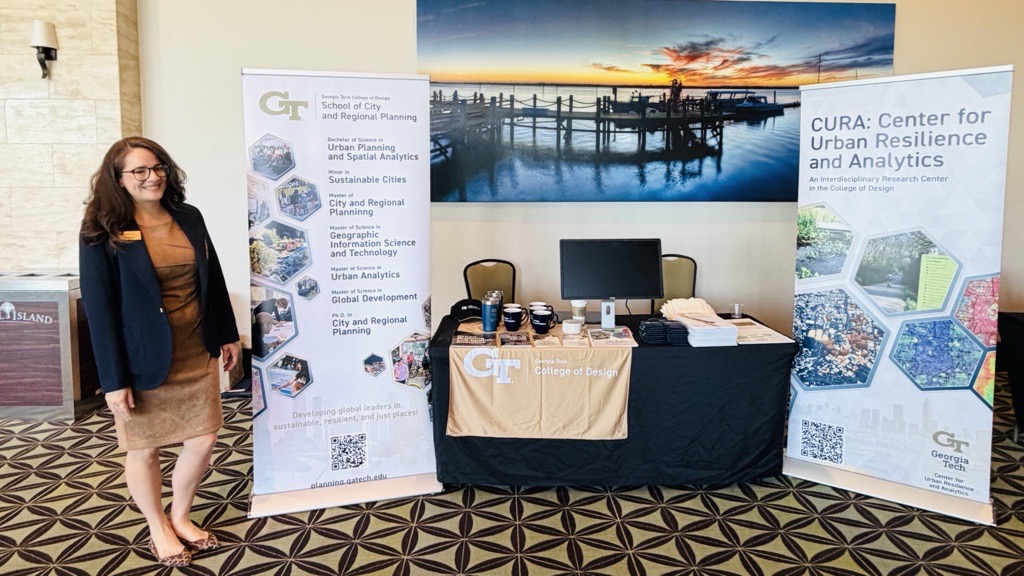
As a conference sponsor, Georgia Tech’s Center for Urban Resilience and Analytics (CURA) played a leading role in this statewide conversation, emphasizing data-driven planning, open-access tools, and community collaboration.

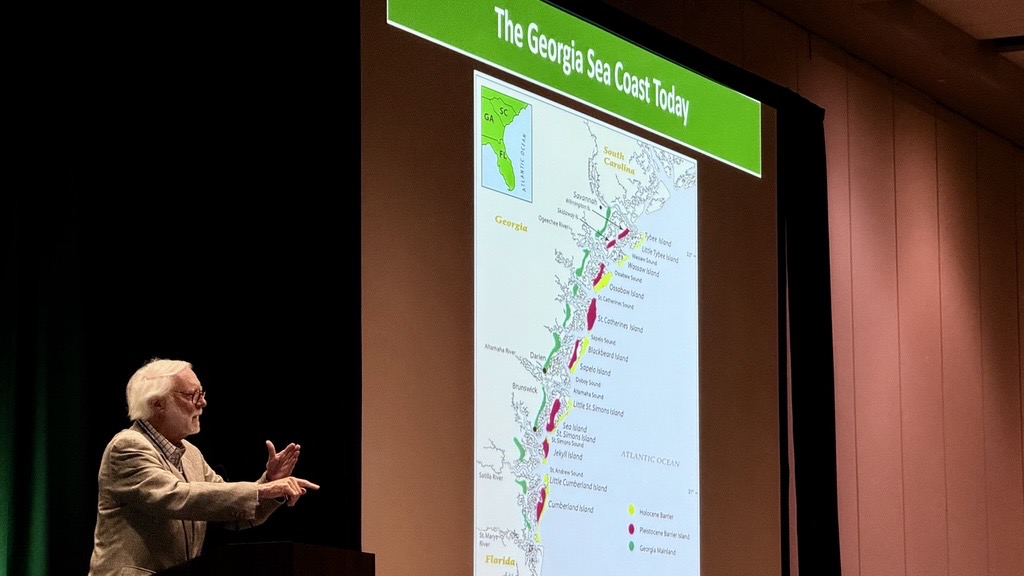
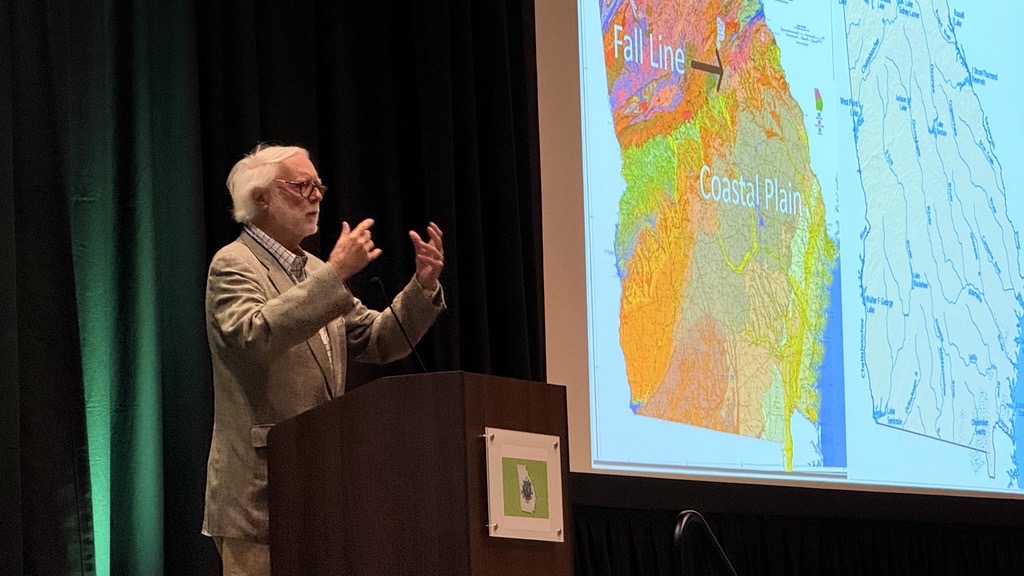
In the opening keynote, Georgia Tech President Emeritus and former Smithsonian Secretary Dr. Wayne Clough reminded attendees that Georgia’s coastline—once shaped slowly by natural forces—now faces rapid change driven by human activity. He called the shoreline “a strange and beautiful place,” and urged Georgia to “think bigger” about conservation, climate planning, and long-term stewardship. 

Clough highlighted the need for: 

  • Connected conservation corridors
  • Continued protection of salt marsh ecosystems
  • Planning that outlasts political cycles
  • Collaboration across public and private sectors

“We have great legacies in the state of Georgia,” he shared, challenging Georgia to build a future that protects both natural systems and communities.

CURA Leadership: Turning Data into Resilience

At the Georgia Resiliency Conference, Tony Giarrusso, Associate Director of CURA, didn’t just moderate a session — he connected the dots between data, design, and decision-making. His panel, Local and State GIS Efforts, brought together experts from the Georgia Conservancy, the University of Georgia, and the U.S. Army Corps of Engineers to explore how geospatial tools can shape a more resilient Georgia. 

Giarrusso spoke about bridging statewide data with local action through projects like CURA’s restoration access portal for the Georgia Department of Natural Resources — a tool that helps communities see how development affects wetlands and plan for smarter mitigation. 

“With the Georgia Department of Natural Resources, I created a restoration access portal where they can understand the effects of development on wetlands — how to mitigate loss, and how to collect information about it.” 

When asked about the next frontier in resilience work, Giarrusso pointed to the power of collaboration and technology. 

“A lot of it is funding — and engagement. It often takes one person who says, ‘I have an idea,’ and finds their counterpart to make it happen.” 

And on what’s next: “It’s AI. How do we use AI in a geospatial context to address climate change, and how do we use it to better plan for the future?” 

Giarrusso’s leadership throughout the conference reflected CURA’s broader mission — using innovation and partnerships to turn complex data into tools that help communities plan, adapt, and thrive.

Georgia Tech’s Broader Impact Across the Conference

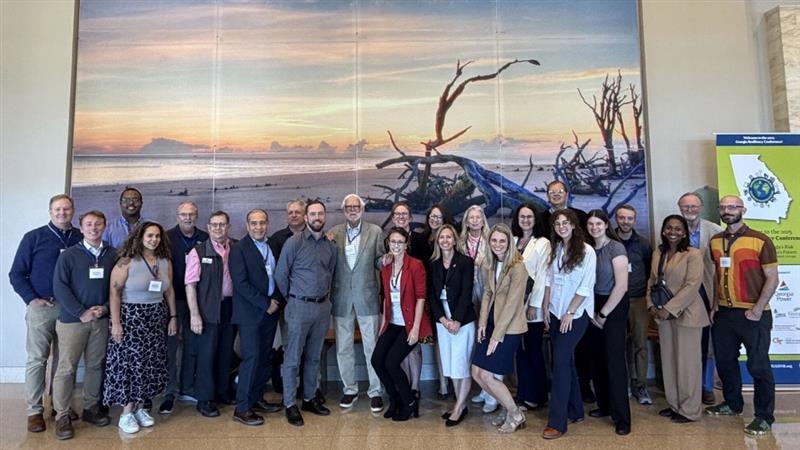
Georgia Tech's presence extended well beyond the mainstage. Faculty, researchers, and students representing multiple colleges and units across the Institute contributed expertise throughout the conference — including the College of Design, College of Sciences, Ivan Allen College of Liberal Arts, Scheller College of Business, and the Brook Byers Institute for Sustainable Systems.

Participants from the School of City & Regional Planning, School of Architecture, School of Public Policy, School of Earth & Atmospheric Sciences, and Georgia Tech Research Institute led discussions on climate communication, emissions modeling, resilient planning frameworks, nature-based infrastructure, and tools for community-driven climate action.

Georgia Tech students also played a meaningful role, sharing research through poster sessions and tool demonstrations — a testament to the Institute’s commitment to developing the next generation of resilience leaders. Together, these contributions reinforced Georgia Tech’s position as a statewide partner in advancing data-driven resilience and community-focused climate solutions.

A State Moving Forward, Together

Set against the natural beauty and coastal vulnerability of Jekyll Island, the conference underscored a shared truth: no single institution can build resilience alone. Hosted by the Georgia Department of Natural Resources Coastal Resources Division, the event brought together leaders from Georgia Tech, the University of Georgia, Georgia Southern University, the Atlanta Regional Commission, the Georgia Conservancy, coastal municipalities, state policymakers, and partners from federal agencies—reflecting a commitment to collaboration across sectors and geography. 

From barrier-island conservation to inland flood-preparedness and data-driven climate tools, Georgia’s resiliency network continues to expand in scale, coordination, and ambition. CURA remains proud to contribute to this statewide effort—helping equip communities with the data, insight, and partnerships needed to plan, adapt, and protect Georgia’s future for generations to come.

Questions?

 
If you can't find the information you were looking for, we'll get you to the right place.
Contact Us